Feeding Bougainvillea: The Low-Nitrogen Rulebook
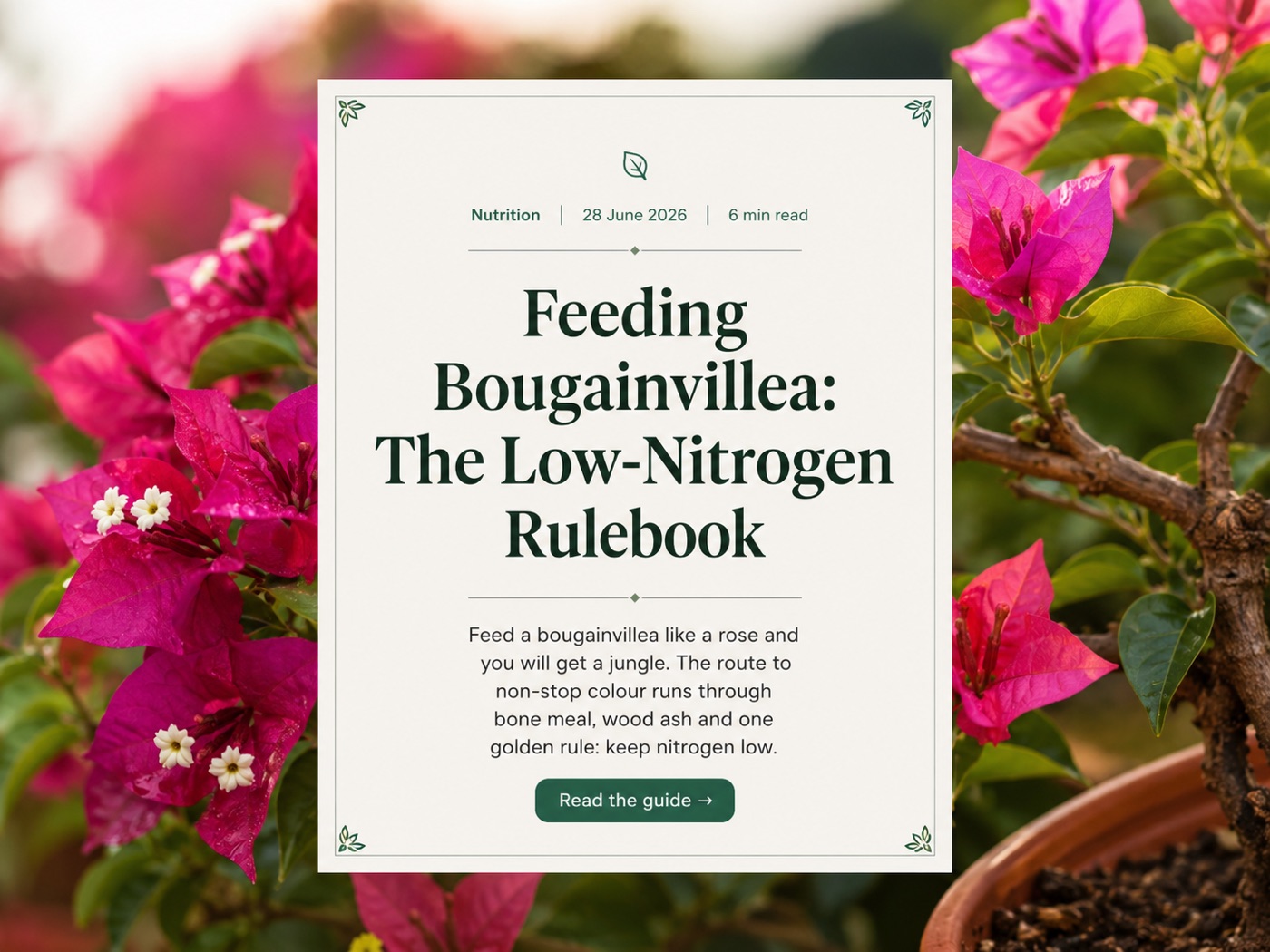
If you remember one thing about feeding bougainvillea, remember this: nitrogen grows leaves, phosphorus and potassium grow flowers. Most disappointing, flowerless plants we see at the nursery have been lovingly overfed with exactly the wrong thing.
The organic schedule
- February and September: work 50 g vermicompost, 20 g bone meal and 10 g neem cake into the top soil of a 30 cm pot.
- Late November: a generous dose of bone meal (30 g) plus wood ash (20 g) to fuel the winter bloom.
- Liquid feeds like mustard cake water: only sparingly, at most once every two months, well diluted.
The chemical alternative
- Use bloom-focused formulas: 13:0:45 (potassium nitrate) or 0:52:34 (mono potassium phosphate) at 1 g per litre, every 20 days through the growing season.
- The most reliable bloom trigger we know: a drought-stress cycle followed by one dose of 0:52:34.
- Never apply plain urea or high-nitrogen lawn fertilizer. The plant becomes a giant green shrub with zero flowers.
Reading the leaves: micronutrients
- Older leaves yellowing between green veins: magnesium deficiency, very common here. Spray Epsom salt at 2 g per litre monthly.
- Newest leaves yellow with green veins: iron deficiency, typical in alkaline mixes. Spray chelated iron (Fe-EDTA) at 0.5 g per litre.
- Browning leaf tips and margins: potassium hunger. Wood ash or a potash feed fixes it.
- Reddish purple tint on old leaves and poor blooming: phosphorus shortage. Bone meal is the classic cure.
Underfeed rather than overfeed, keep the nitrogen minimal, and let the sun and a little thirst do the rest. That is the whole rulebook — pair it with our full seasonal calendar to know exactly when to apply each feed.
Ready to put this into practice?
Shop 400+ VarietiesFrequently Asked Questions
Why is nitrogen bad for bougainvillea?
Nitrogen grows leaves, while phosphorus and potassium grow flowers. High-nitrogen fertilizer or plain urea pushes a bougainvillea into vigorous green growth at the expense of blooms, which is the most common feeding mistake we see.
What is the best fertilizer for bougainvillea flowers?
A bloom-focused, low-nitrogen formula: bone meal and wood ash for organic growers, or a phosphorus/potassium mix such as 0:52:34 or 13:0:45 at 1 g per litre for chemical feeders, applied every 20 days through the growing season.
Why are my bougainvillea leaves turning yellow between the veins?
Older leaves yellowing between green veins usually signals a magnesium deficiency, common in this climate. Spray Epsom salt at 2 g per litre monthly to correct it.