The Perfect Pot and Soil Mix for Bougainvillea
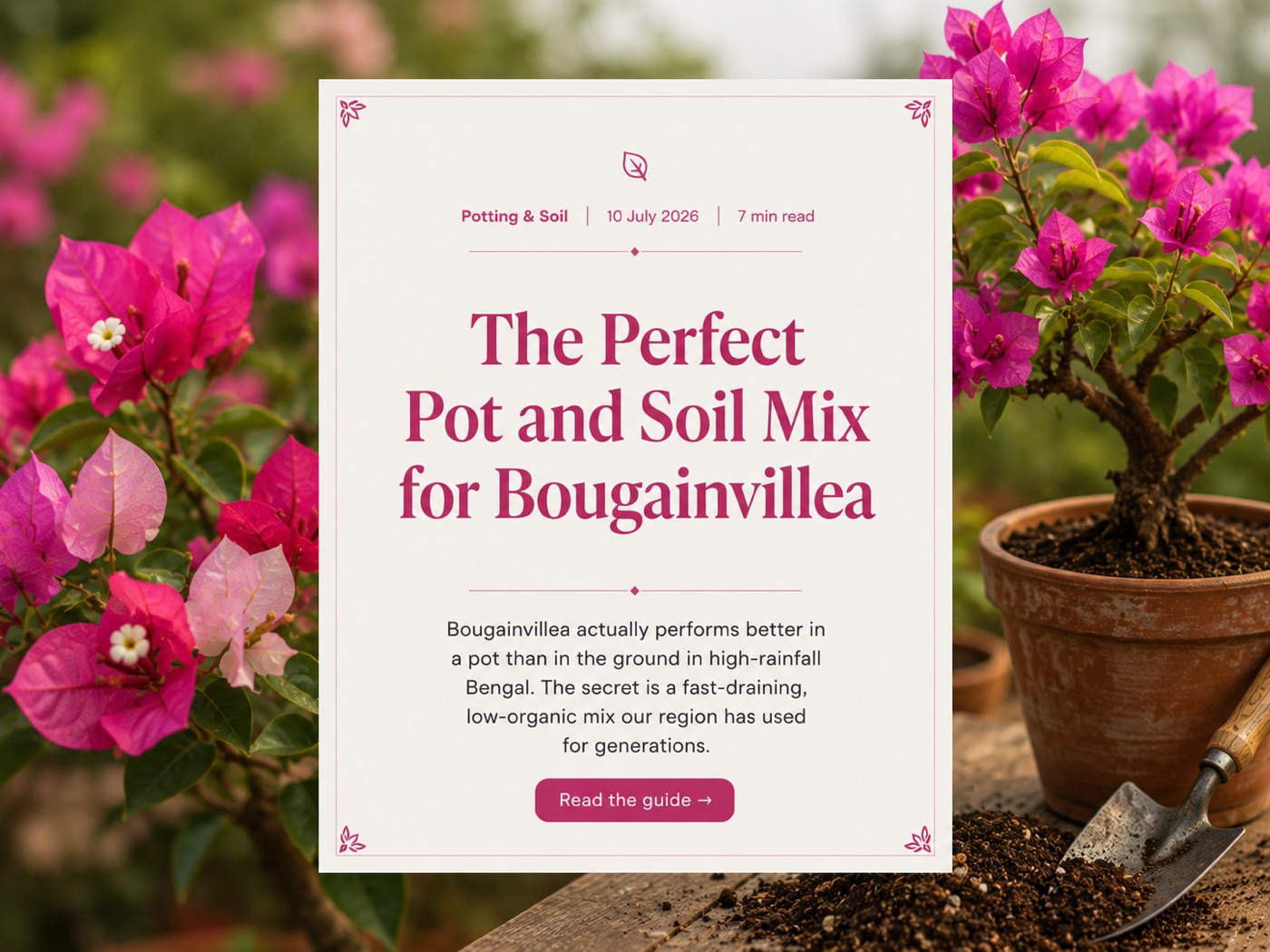
Here is a happy secret for terrace gardeners: bougainvillea does not merely tolerate pots, it prefers them. In our high-rainfall climate, a container protects the roots from monsoon waterlogging, and the restricted root space itself pushes the plant to flower harder.
Choosing the pot
- Material: unpainted terracotta or heavy cement tubs. The porous walls help soil dry quickly, which induces flowering, and the weight keeps a big canopy stable in rooftop wind.
- Size: a young plant is happy in a 20 cm pot. Move up gradually to a 30 cm pot, and finally a 40 to 45 cm tub for a large specimen. Bigger is not better here.
- Drainage: at least 4 generous holes on a large tub. Water should run through within seconds.
- Pot feet: essential. Raising the pot 5 cm ensures complete drainage and stops roots escaping into the roof slab.
The nursery soil recipe
Bougainvillea comes from dry, rocky South American scrubland. The closer your mix gets to that, the better it blooms. Rich, moisture-holding compost mixes are the enemy.
- 35% coarse river sand
- 30% garden loam
- 25% brick chips (surki) or pumice
- 10% mature compost
- Per 10 litres of mix, add 20 g bone meal and 10 g neem cake.
Bengal gardeners have used brick-kiln surki mixed with river sand for generations. It is the perfect fast-draining, nutrient-lean base that forces spectacular winter blooms — see why bougainvillea stops flowering for the rest of the bloom-forcing picture.
Repotting: less is more
Bougainvillea roots are brittle and hate disturbance. Repot only every 3 to 4 years, in February or March, and only when water stops draining or the plant loses vigour. A slightly root-bound bougainvillea is a blooming bougainvillea.
When you move a plant from a nursery bag, slit the plastic and slide the rootball in whole. Never tease or break the roots the way you might with other shrubs. In between repottings, simply scrape off the top 5 cm of soil each February and replace it with fresh mix and a spoon of bone meal.
Ready to put this into practice?
Shop 400+ VarietiesFrequently Asked Questions
What is the best soil mix for bougainvillea in pots?
A fast-draining, nutrient-lean mix: roughly 35% coarse river sand, 30% garden loam, 25% brick chips or pumice, and 10% mature compost, with a little bone meal and neem cake worked in. Rich, moisture-holding compost mixes work against flowering.
What size pot does bougainvillea need?
Start young plants in a 20 cm pot and move up gradually to 30 cm, then a 40–45 cm tub for a large specimen. Bigger is not better — a slightly root-bound bougainvillea blooms harder than one in an oversized pot.
How often should I repot bougainvillea?
Only every 3 to 4 years, in February or March, and only once water stops draining well or the plant loses vigour. Bougainvillea roots are brittle and dislike disturbance, so less frequent repotting is better.